Visual Materials
[Flowers, seed farm]
You might also be interested in
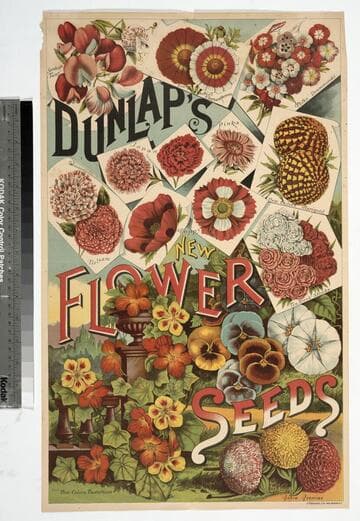
Dunlap’s new flower seeds
Visual Materials
Image of a garden full of foliage and flowers, including zinnias, pansies, moon flowers, and nasturtiums, with individual flower varieties illustrated and captioned on seed packets above in an advertisement for Dunlap's flower seeds.
priJLC_HORT_002429
Image not available
[Flowers, seed farm]
Visual Materials
Maynard L. Parker negatives, photographs, and other material consists of 57,893 black-and-white negatives, color transparencies, black-and-white prints, and color prints; 39 presentation albums; and 17 boxes of office records, 1930-1974. Created primarily by Maynard Parker, the archive documents the residential and non-residential work of architects, interior designers, landscape architects, artists, builders, real estate developers, and clients associated with these fields, foremost among them the magazine House Beautiful. Also included in the collection are photographs taken by other individuals, such as architect Cliff May and Parker's assistant, Charles Yerkes.
photCL MLP
Image not available
[Canada and Mexico trip]
Visual Materials
Views of landscapes in Canada and Mexico; Shasta Dam; fields of flowers; Stockmen's Hotel sign; portraits of unidentified individuals; a hotel swimming pool and a lodge-type hotel; views of the yellow Jeepster; farm equipment and an airplane; cows; architectural details; a sculpture of Babe the Blue Ox; and numerous unidentified buildings.
photCL MLP 4094
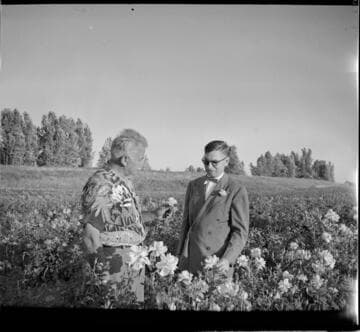
Landscaping images for Joseph E. Howland: Dering, Mike
Visual Materials
Images of two men standing in a field of flowers. Man in suit, at right in (009), is Joseph E. Howland.
photCL MLP 2003
Image not available
Flower farms including the Bodger Seed Farm
Visual Materials
The collection consists of 3511 photographs, negatives and ephemeral items circa 1850s-1982 covering a wide breadth of subject matter. The collection includes images of Los Angeles streets and city views; neighborhoods (including Olvera Street, the Plaza, and Chinatown); Los Angeles office buildings and blocks, municipal buildings and facilities (including city halls, court houses, federal buildings, and postal facilities); Los Angeles County communities (including Culver City; Beverly Hills; Watts; Compton; the Hollywood/Cahuenga area; Mt. Washington; Redondo Beach; Hermosa Beach; Venice Beach; Santa Monica; San Pedro; Wilmington; Long Beach; Burbank; Glendale and the San Fernando Valley; Pasadena and the San Gabriel Valley; Avalon and Santa Catalina Island); San Gabriel and San Bernardino Mountains; San Diego, Orange, Riverside, San Bernardino, and San Francisco Counties; Los Angeles County homes, residential buildings, and gardens; Los Angeles parks; Los Angeles, Orange, and Riverside County schools, colleges and universities; Los Angeles County churches and synagogues; Los Angeles area country clubs; hotels and theaters in Los Angeles, Riverside, San Diego, San Bernardino Counties, and the city of San Francisco; and Los Angeles County department stores, newspaper buildings, storefronts, and restaurants. General subjects represented in the collections include industry and manufacturing (including iron and steelworks; brick and terracotta; the motion picture industry; and the clothing trade); agriculture; mining and other extractive industries; infrastructure (including dams and roads, and photographs taken for Caltrans documenting the construction of the Pasadena Freeway, also known as the Arroyo Seco Historic Parkway); water and power (including photographs depicting the irrigation of the San Fernando Valley in the 1910s); transportation; sports and leisure activities (including images depicting the 1932 Olympics in Los Angeles); fairs and expositions (including trade and industrial fairs; the Panama Pacific Exposition; the California Pacific International Exposition; the Lewis and Clark Centennial Exposition; and the Alaska-Yukon-Pacific Exposition); fiestas and parades (including the Fiesta de Los Angeles, the Fiesta de las Flores, and the Pasadena Tournament of Roses), circuses and circus wagons; missions in California, the Southwest United States, and Mexico; and California adobes and ranchos. Miscellaneous images include national and state parks; the California Gold Rush and mining towns; the armed forces in California; native and indigenous culture; local flora, including trees; unidentified people; unidentified scenery; documents; maps; and a small grouping of ephemera pertaining to the Wilshire Boulevard Miracle Mile. The collection includes photographs produced by 141 identified photographic studios, photographers, and publishers including Blanchard; Cromwell and Westervelt; Frasher's Studio; Garden City Foto; Harold W. Grieve, T.E. Hecht; William Henry Hill; Keystone Photo Service; Luckhaus; Charles F. Lummis; F.H. Maude; Harold Parker; Putnam Studios; F.H. Rogers; Julius Shulman; Spence Airplane Photos; Stagg; A. Sturtevant; Carleton Watkins; and "Dick" Whittington Studio. There are also photographs made by or for companies including American Trona Corporation; Douglas Aircraft; Estelle Mines Corporation; Metro-Goldwyn-Mayer; Paramount Pictures; Selznick International Pictures; Studebaker Corporation; Union Pacific Railroad; and United Artists. Images produced and compiled by the Federal Writers' Project Southern and Northern California branches include photographs by Viroque Baker, Horace Bristol, Burton Burt, Fred William Carter, Fred R. Dapprich, Luckhaus Studios, Julius Shulman, and Art Streib.
photCL 400 volume 1
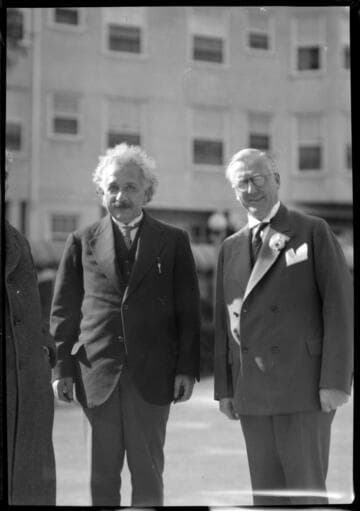
Albert Einstein with an unidentified man, 1931
Visual Materials
Albert Einstein, wearing a suit and tie, poses with an unidentified man wearing a suit, tie, and glasses.
photCL 402 (33099e)